
About
It is about detaining images from the street that tell naked truths, whisper lies, and wander through tales of hope and despair—stories of joy and soft celebrations, or trial, trust, and betrayal. As pilgrims on a journey in the streets of Los Angeles, may we see light and feel short stories without known endings.




The Stories of the street are mine.
She asked me, "Why do you take sad photographs?" I cleared my throat and said, "My camera eye is a magnet, attracted to the unhappy. The sad. The lost. Adding: What is it about distress that captivates? Why do we slow down to watch car crashes? I ended by saying, if every day is a fresh new beginning, maybe I will capture on the elusive image of hope.”


IT AIN'T NOTHING- SO IT MUST BE SOMETHING
I follow the pathways of the streets with my camera, capturing candid moments and interesting people—usually people far more interesting than me. One of those people is my friend, Mr. CJ. A month or so ago, he showed me the diploma he had just received from The Los Angeles Film School. He told me about the work it took to earn his degree in sound design and editing and about his dream of making films. He says he panhandles for pay, but he'd much rather be on his way to working on a sound design project. Mr. CJ has a fascinating backstory. Over time, he's shared fragments of it with me, and I feel honored that he has. "It ain't nothin'"—so it must be something. That's what Mr. CJ, and his willingness to share his journey, has taught me.


Just Like That
He came upon me like Prot, the intergalactic visitor from the movie K-PAX, who appears in the opening scene at Grand Central Station. I turned around—and there he was. He asked me to take his picture.
How could I say anything but YES?
He was in constant motion—dancing, posing, flashing a peace sign, smiling with a one-sided Popeye grin. Then, almost casually, he told me he didn’t have a cell phone. I showed him the photographs I had taken and gave him my card, telling him to reach out and I would get the images to him. “I don’t have a phone,” he said. Then he asked if I could get him one. “No,” I said, handing him a few dollars instead. I asked him to please buy something healthy with it—something that would do him good, not something that would harm him.
I crossed the street. When I looked back, he had disappeared into the park. Just like that. A brief encounter. A few photographs. Fewer words. A Hug. A small exchange between two strangers. But some moments stay with you. This one will always.


Narrows Man Study
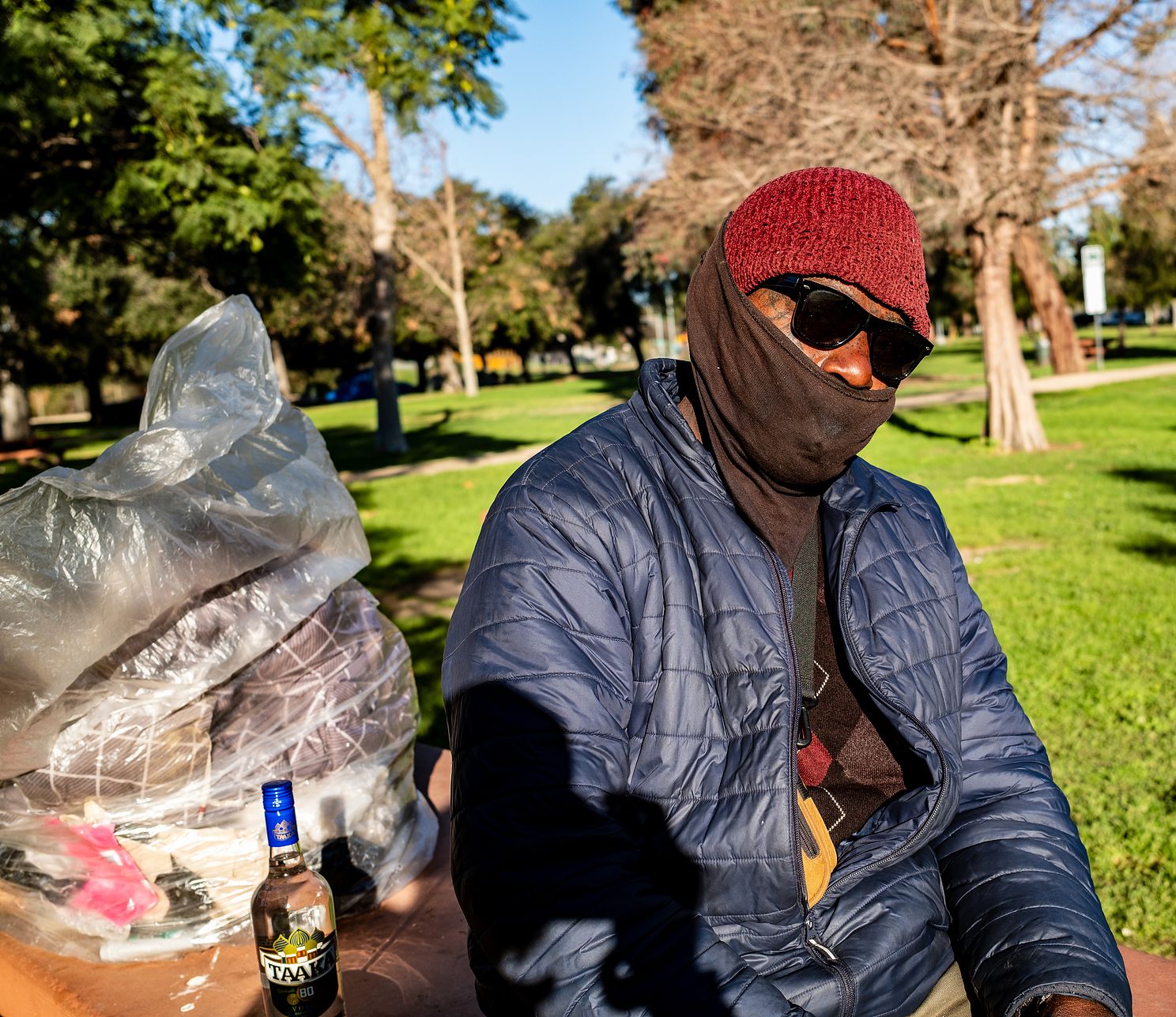
While walking along the Glendale Narrows, a man noticed my camera and approached me, saying in broken English, “You want to take pictures of me.” The Mysterious Ms. S was on the phone and heard the whole exchange, which touched on the US, Venezuela, the army, and war. I couldn’t tell if he admired war or peace. I photographed him in color, but later converted many shots to black and white—do you prefer that look? I couldn’t catch his name, but he did say “god bless you,” which felt like a small blessing, as if he’s been touched by something greater—maybe by God, or perhaps by the god of wine and hard street living.

NoHo Hands; A Protest
Leonardo da Vinci believed you could know a person by their hands. As your eyes move across the protest signs, pause and look at the hands holding them—forceful, gripping, and hopeful. Brown, White, and Black hands; gentle and worn; old and young; polished and scarred; strong and delicate. Each carries a story, each a burden, each a belief. Bound together for the right to seek life, liberty, and the pursuit of happiness. Da Vinci’s 1474 silverpoint study of hands is a masterpiece. My attempt only whispers the courage and conviction of these protestors. I hope you feel what their hands reveal.


